Blog Topics
- AI Website Design & Development
- Arabic RTL Website Design & Development
- Artificial Intelligence
- Artificial Intelligence (AI)
- Cybersecurity
- e-commerce
- General News
- Latest News
- Logo Design
- Neuromarketing
- SEO
- Services
- Sustainable Design
- Typography
- UX Design
- Web Design
- Web Development
- Web Hosting
- Website Design
- Website Development
Search
Search our projects, research and resources
INTERESTED IN WHAT WE CAN DO FOR YOU?
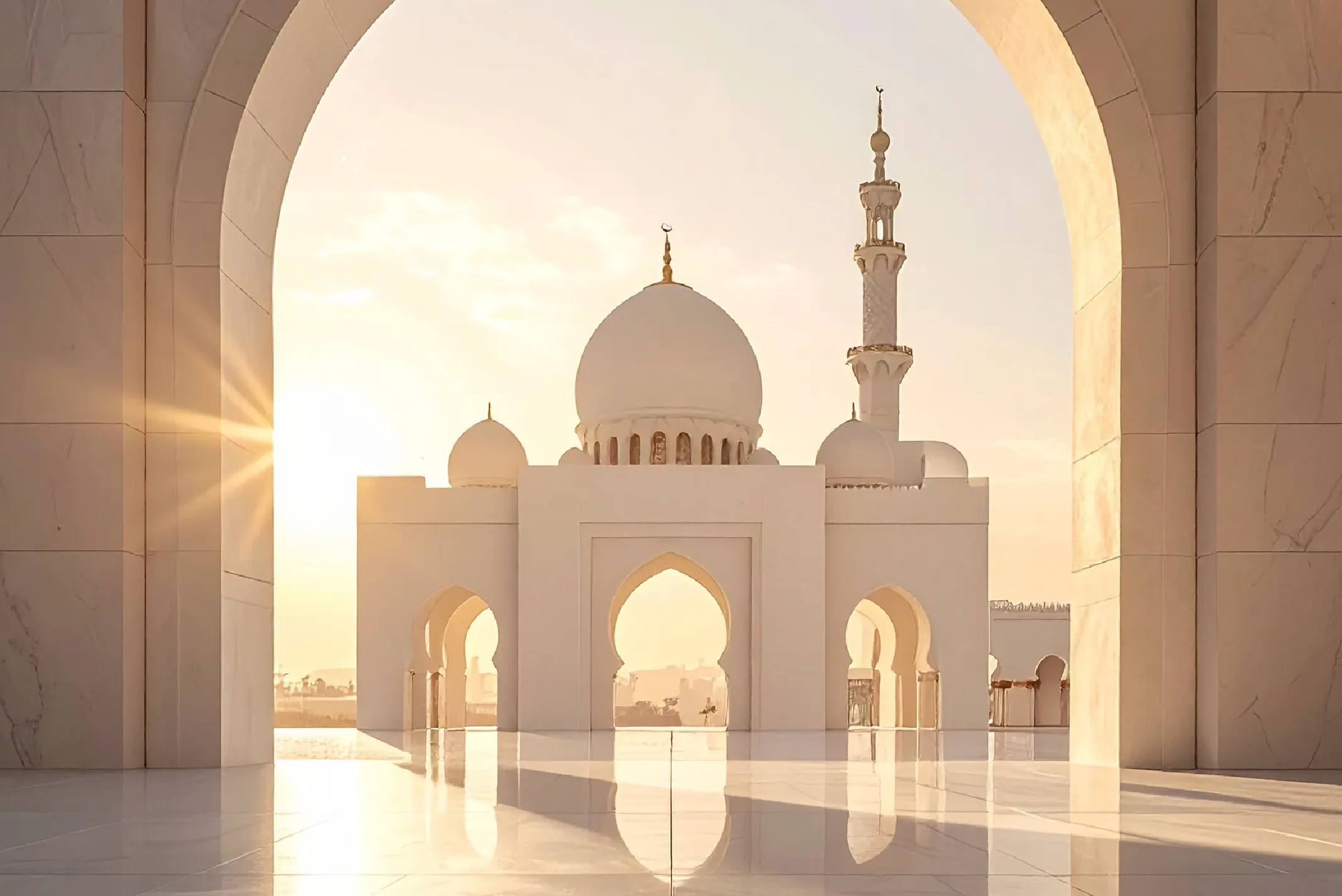
Arabic Website Design & Development: Bilingual RTL Websites That Don’t Feel Translated
In short: Arabic website design means building a website that reads, behaves and converts naturally for Arabic-speaking users, not just swapping English words for Arabic ones. It covers right-to-left (RTL) layouts, Arabic typography, localised content, bilingual SEO with hreflang, mobile-first testing and a CMS that manages both languages. KNOWN builds bilingual Arabic-English websites for businesses across the Middle East and North Africa (MENA), including the launch WordPress website for CNTXT, a joint venture between Cognite, Saudi Aramco and Google Cloud.
When a business expands into Arabic-speaking markets, translating the website is usually treated as step one. But translation is only one part of the equation.
Arabic is an official language in 22 countries and is spoken by more than 400 million people, according to UNESCO. Those visitors don’t just need to understand what your website says. They need to feel it was designed with them in mind.
That means getting the details right: How Arabic is read, how content flows across a page, how typography behaves, how navigation works from right to left, and whether the whole experience feels culturally familiar rather than mechanically translated.
For brands targeting the UAE, Saudi Arabia, Qatar, Egypt, Morocco and beyond, an Arabic website isn’t another language option. It’s another digital experience. Done properly, English and Arabic feel like two equally considered expressions of the same brand.
What Is the Difference Between Translation and Localisation?
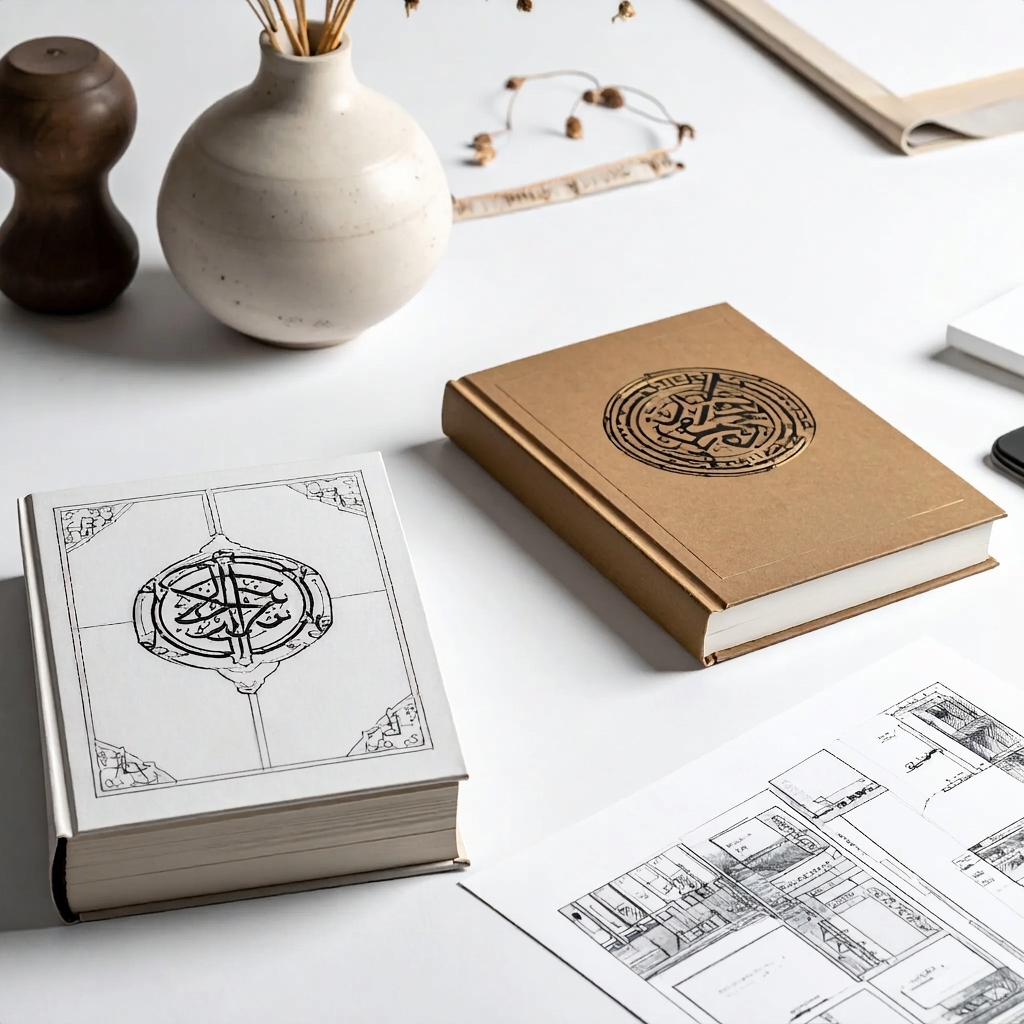
Translation changes the language; localisation changes the experience. A translated site swaps English words for Arabic ones. A localised Arabic site also adapts layout direction, typography, imagery, forms, dates, currency and tone so the page feels native to the reader.
A direct translation doesn’t account for what happens to the rest of the interface. Arabic reads right to left (RTL), so navigation must follow that direction. Text length changes. Buttons, menus, forms, icons and content hierarchy may all need to behave differently.
Localisation also covers the small signals that build trust in MENA markets:
- Currency and pricing: Shown in local terms (AED, SAR, QAR, EGP).
- Dates and calendars: Including the Hijri calendar where relevant.
- Numerals: Choosing Western (1, 2, 3) or Eastern Arabic (١، ٢، ٣) digits per market.
- Imagery: Reflecting the region’s people, places and cultural norms.
- Phone and address formats: Ensure that they match local conventions.
- Copy written in Modern Standard Arabic: Or a regional dialect where the brand voice calls for it.
A successful bilingual website should never feel like an English site with an Arabic layer placed on top. It should feel like one cohesive brand that works naturally in both languages.

What Is RTL Website Design (and Why Isn’t It Just Flipping the Page)?
RTL (right-to-left) website design is the practice of building interfaces for languages such as Arabic, Hebrew, Persian and Urdu, where text flows from right to left. It is more than mirroring an English layout. Some elements must flip, some must never flip, and mixed Arabic-English text needs careful handling.
It is one of the biggest misconceptions in Arabic web design: that an English layout can simply be mirrored. Here’s what actually changes.
Elements that should mirror in RTL:
- Navigation menus, logos and primary layout (start on the right)
- Back and forward arrows, breadcrumbs and carousels
- Text alignment, form labels and progress indicators
- Sidebars and icon-plus-label pairings
Elements that should not mirror:
- Brand logos and wordmarks
- Media controls such as play and pause buttons
- Clocks, charts with time axes and checkmarks
- Phone numbers, email addresses and Latin brand names inside Arabic text
“Mirror-image the design patterns from left-to-right language sites.” – Jakob Nielsen, Nielsen Norman Group.
Under the hood, a proper RTL build uses the HTML dir="rtl" and lang="ar" attributes, CSS logical properties (such as margin-inline-start instead of margin-left) and careful handling of bidirectional text, where Arabic and English sit in the same sentence.
Get it wrong and small points of friction appear everywhere. A menu feels unnatural. A call-to-action looks disconnected from the content beside it. Text becomes cramped or misaligned. Individually minor; together, they make a website feel foreign.
The goal is simple: The Arabic version should feel intentional, usable and polished from the very first interaction.
“Do not use CSS to apply base direction in HTML pages.” – W3C, the web standards body.

Which Arabic Fonts Work Best for Websites?
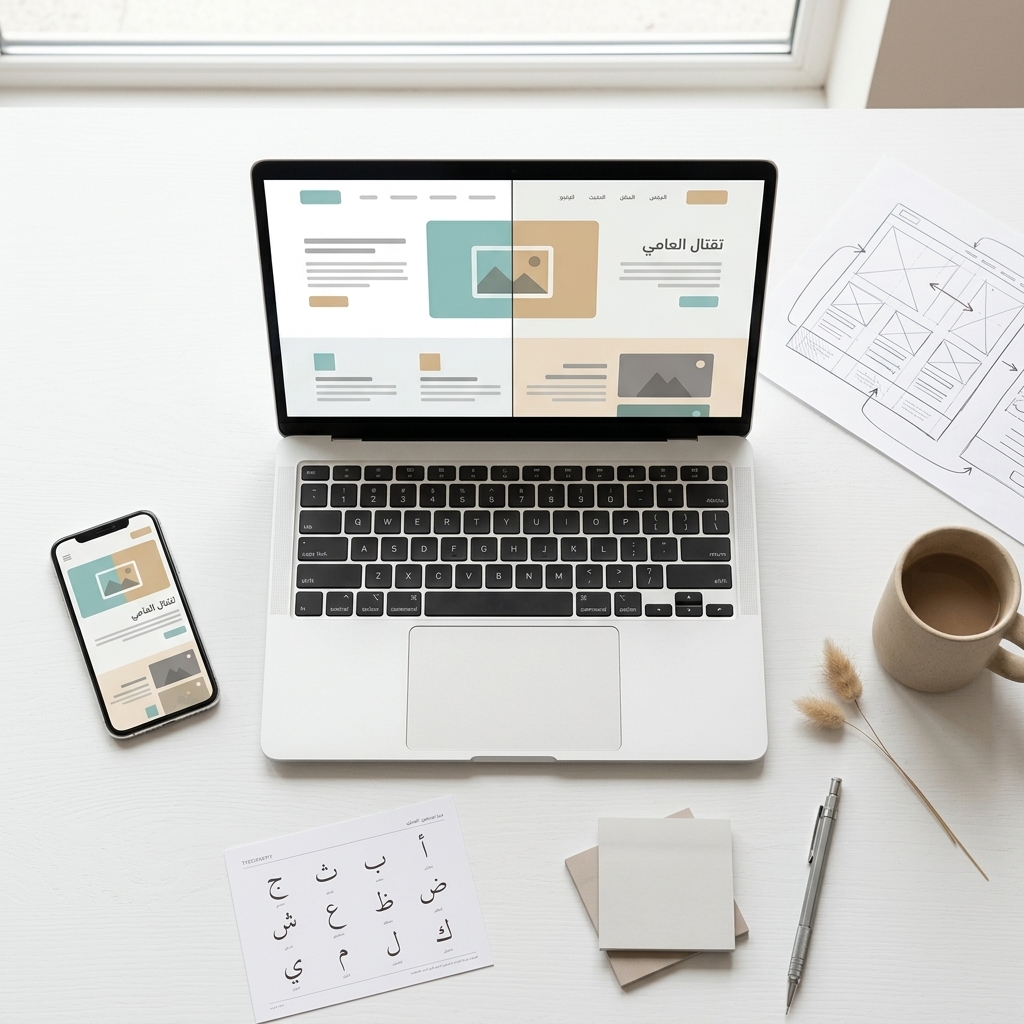
The best Arabic web fonts are highly legible on mobile, support the full Arabic character set and pair well with your English typeface. Popular, well-supported choices include IBM Plex Sans Arabic, Noto Kufi Arabic, Noto Naskh Arabic, Cairo, Tajawal and Almarai, all available as web fonts.
Arabic script has its own proportions, connected letterforms and rhythm. A font that looks beautiful in English won’t automatically create the same impression in Arabic. Arabic text often needs a slightly larger size and more generous line height to stay readable, especially on small screens.
A strong Arabic typography system considers:
- Arabic font selection and pairing with your English typeface.
- Font size, line height and spacing for readability.
- Content density and white space.
- Heading hierarchy that works in both scripts.
- Navigation and button labels that fit without truncation.
- Font weights that match across both languages.
- Page speed, using subsetted, self-hosted web fonts.
The goal is to make Arabic and English feel like they belong to the same brand. A strong bilingual design system gives each language the space it needs while keeping a recognisable visual identity across the site.
How Do You Keep One Brand Consistent Across Arabic and English?
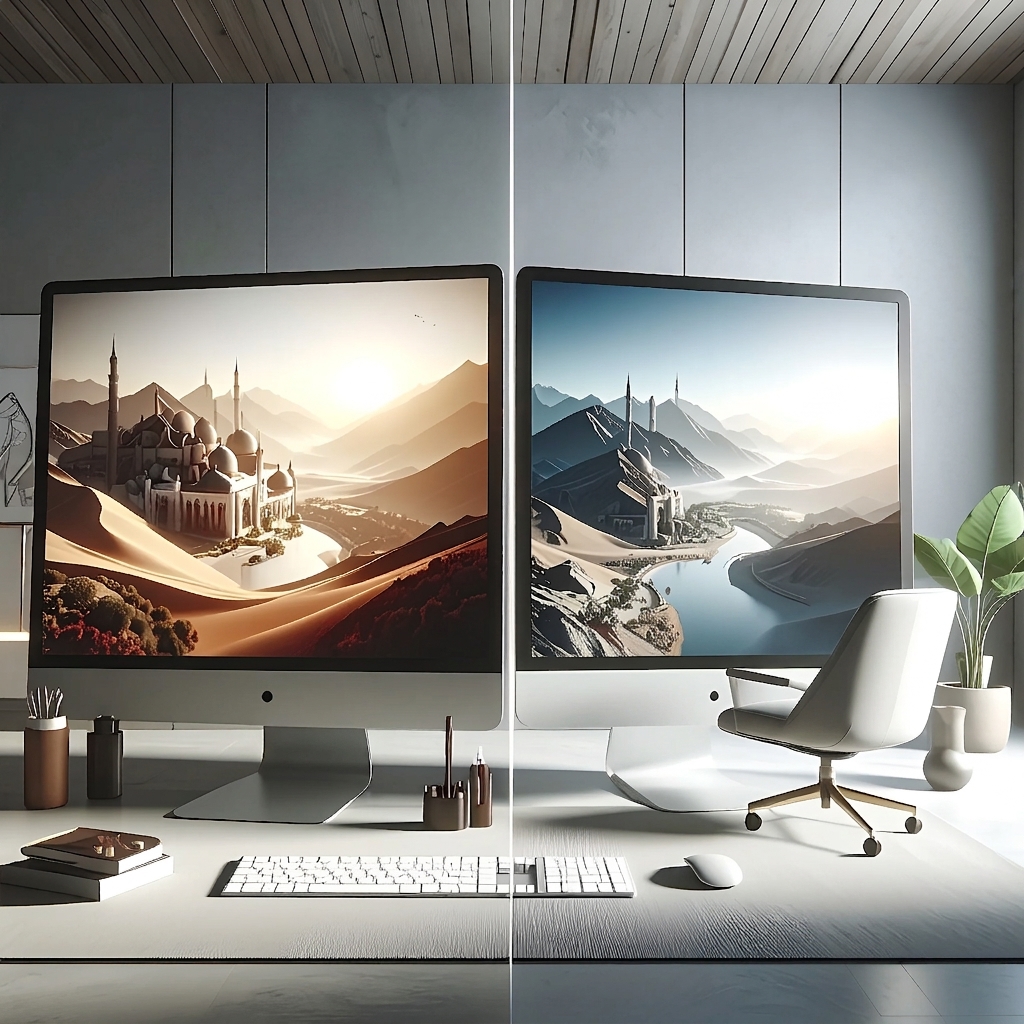
Use one shared design system with language-aware components. Colour, imagery, tone, icons and personality stay identical; layout direction, typography and spacing adapt to each language.
Visitors switching languages should feel the content change, not the brand.
A bilingual website creates a unique design challenge: the brand must stay consistent without forcing two different reading systems into exactly the same structure.
This is where adaptive design becomes essential. The English and Arabic versions share the same brand language, imagery, colour, tone and components, while the interface adapts naturally to each reading direction.
It’s a far stronger approach than maintaining two disconnected websites, which drift apart and double your maintenance.
The content changes. The experience stays familiar.

How Should a Bilingual Website’s Content Be Structured?
Plan both languages into the sitemap, wireframes and content model before development starts. Each page should have a matching counterpart in the other language, clear language URLs (such as /ar/) and a visible language switcher that keeps users on the equivalent page.
A bilingual website isn’t only a design project. It’s an information architecture challenge, especially for businesses with multiple services, resource centres, product catalogues or regional content.
A strong structure considers:
- How pages are organised and paired in each language.
- How navigation behaves across RTL and LTR versions.
- How translated content is created, approved and updated.
- How metadata and SEO elements are handled per language.
- How users switch between language versions without losing their place.
- How new content can be added without breaking either experience.
Discovering these limitations after launch is expensive. Planning for both languages from day one isn’t.
How Does Arabic SEO Work?
Arabic SEO means optimising the Arabic version of your site for how Arabic speakers actually search.
It requires native Arabic keyword research, Arabic metadata, hreflang tags linking each Arabic page to its English equivalent, crawlable language URLs and region-specific content where markets differ.
A website can look perfect in Arabic and still be invisible if its search strategy was built around the English version.
Translated keywords rarely match real search behaviour: Arabic users phrase queries differently, mix Arabic and English terms, and search patterns vary between the Gulf, the Levant, Egypt and North Africa.
“It is usually best for you to explicitly indicate your language- or region-specific pages.” – Google Search Central.
The technical foundations of bilingual SEO include:
- Hreflang tags (for example
ar,ar-SA,ar-AE,enandx-default) so Google serves the right language to the right user. - Clean language URLs, typically subfolders such as
/ar/, so each version is indexed separately. - Arabic title tags, meta descriptions, alt text and schema markup, written natively rather than machine-translated.
- A deliberate URL slug strategy, as Arabic-script slugs can display as long encoded strings when shared.
- Separate XML sitemaps or hreflang-annotated sitemaps for each language.
- Search Console and Bing Webmaster Tools monitoring for both versions.
The same structure also helps AI search. ChatGPT, Gemini, Perplexity and Google’s AI Overviews draw on clearly structured, well-labelled pages in the user’s language. A properly built Arabic version gives them something to cite.
KNOWN builds SEO-friendly bilingual structures into every Arabic website, so both language versions can be found locally across MENA and internationally. Learn more about our SEO services.
Why Does Mobile Matter Even More for Arabic Websites?
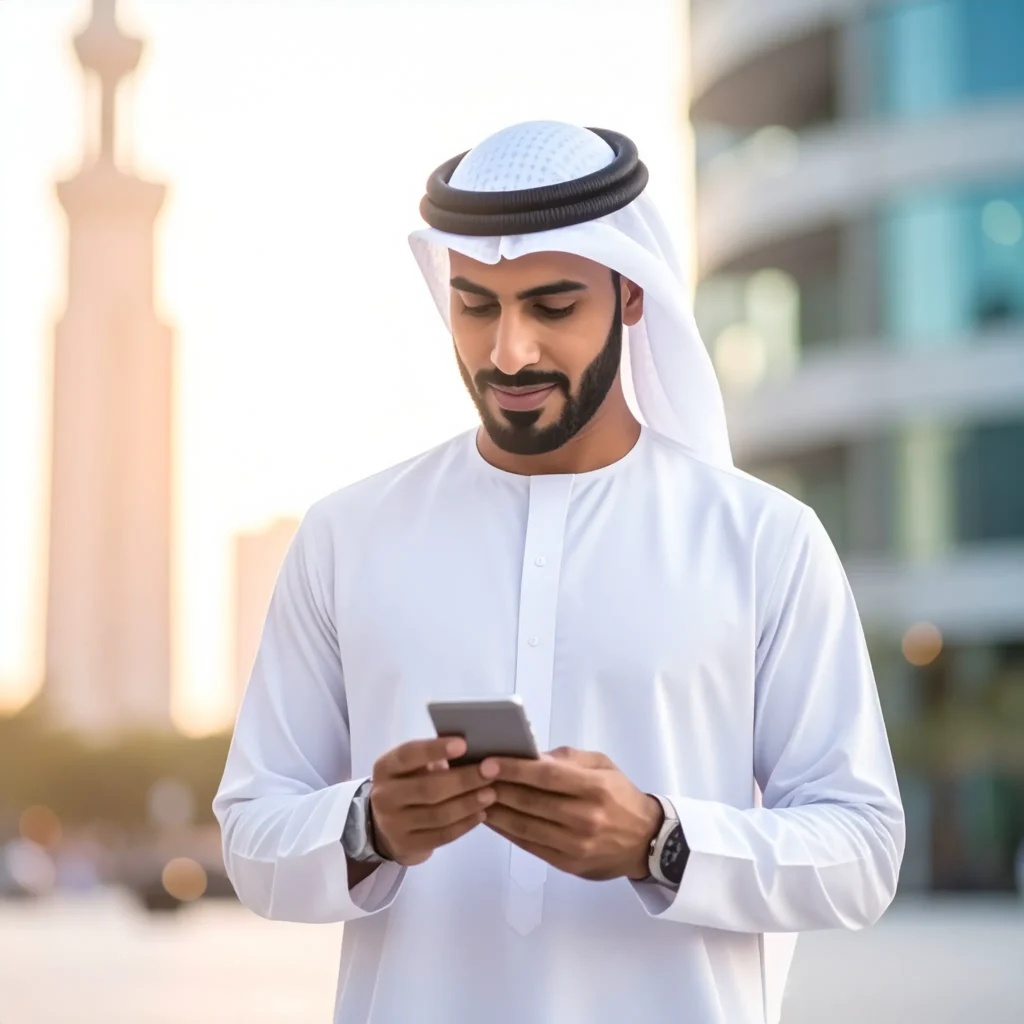
Across the Gulf and wider MENA region, most browsing happens on smartphones, so an Arabic website must be designed and tested mobile-first.
RTL layouts often break on small screens first: Menus, sliders, forms and mixed-language text all need testing on real devices.
Your audience doesn’t experience your website from a sitemap. They experience it from a screen, and increasingly that screen is a phone.
On mobile, every RTL detail is magnified:
- Hamburger menus should open from the right.
- Swipe gestures and carousels should follow RTL direction.
- Buttons need enough tap space for Arabic labels.
- Typography must stay readable at small sizes.
- Forms must accept Arabic input and right-align correctly.
- Images and layouts must scale without breaking alignment.
A responsive bilingual website should feel as deliberate on a smartphone as it does on a desktop. Explore our approach to website design.

Can WordPress Manage an Arabic and English Website?
Yes. WordPress supports Arabic and RTL natively, and multilingual plugins such as WPML or Polylang let teams manage English and Arabic content side by side in one CMS. Each language can be edited separately while staying linked to its counterpart page.
What happens after launch is often overlooked. If every Arabic update needs a developer, the site quickly becomes hard to maintain and the Arabic version falls behind.
A properly structured CMS lets your marketing team publish and update both languages independently, keep translations paired, and add new pages without breaking either experience.
That’s the difference between a website that’s bilingual at launch and one that stays bilingual as the business grows. See our web development services.

KNOWN’s Experience Designing for Arabic-Speaking Markets
Case Study: A Bilingual Arabic-English Website for CNTXT launch
CNTXT is a joint venture between Cognite (Norway), Saudi Aramco (KSA) and Google Cloud, offering cloud, AI and data management services in the MENA region. KNOWN designed and developed its bilingual Arabic-English website on WordPress.
The brief: Both languages had to deliver equal clarity, usability and visual polish for an international, enterprise-level audience.
What we delivered:
- A bilingual Arabic-English website with full RTL behaviour.
- Arabic and English versions edited separately within the same WordPress CMS.
- Typography, content hierarchy and navigation designed for both reading systems.
- Responsive layouts tested across desktop, tablet and mobile.
- An SEO-optimised content structure built to scale across the MENA region.
The result was a platform that served an international audience without compromising the experience for Arabic-speaking users. That’s the standard businesses should aim for: not an English website translated into Arabic, but a digital experience designed to work in Arabic.
Arabic Website Checklist: 12 Things to Get Right Before Launch
Use this checklist to test whether your Arabic website is genuinely localised or just translated.
dir="rtl"andlang="ar"are set correctly on Arabic pages.- Navigation, layout and directional icons mirror correctly.
- Logos, media controls and phone numbers do not mirror.
- Arabic fonts are legible on mobile and paired with your English typeface.
- Copy is written or edited by native Arabic speakers, not machine-translated.
- Currency, dates, numerals and address formats suit each target market.
- Every Arabic page has an English counterpart linked with hreflang.
- Arabic title tags, meta descriptions and alt text are in place.
- The language switcher keeps users on the equivalent page.
- Forms accept Arabic input and validate correctly.
- Layouts are tested on real iOS and Android devices in Arabic.
- Your team can update Arabic content in the CMS without a developer.
When Your Audience Changes, Your Digital Experience Should Too
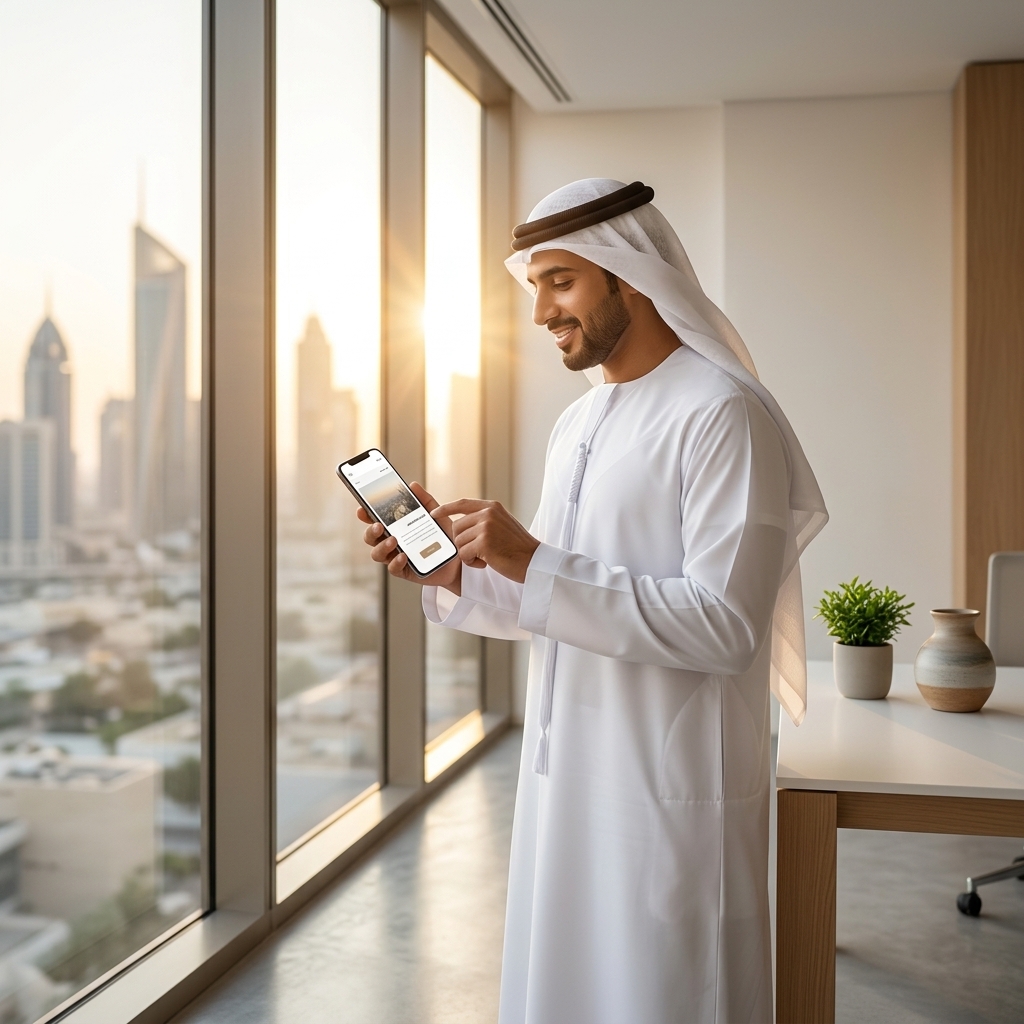
Expanding into a new market is about more than changing the language of your marketing.
It means understanding how people interact with your brand.
For Arabic-speaking audiences, that means taking RTL behaviour, typography, localisation, bilingual content structures, mobile usability and search visibility seriously from the beginning.
Because your website communicates something before a visitor reads a single paragraph.
It communicates whether your business understands its audience.
A thoughtfully designed Arabic website says: We considered how you experience our brand.
For businesses looking to build credibility across the Middle East, North Africa and wider Arabic-speaking markets, that difference matters.
Frequently Asked Questions:
What is RTL web design? RTL (right-to-left) web design is an approach to building websites for languages such as Arabic, Hebrew, Persian and Urdu, where text flows from right to left. It affects navigation, alignment, typography, icons, forms and layout, and requires knowing which elements to mirror and which to leave unchanged.
Is translating an English website enough for an Arabic audience? No. Translation changes the words, but a successful Arabic website also needs RTL layout behaviour, Arabic typography, localised content, mobile testing and bilingual SEO. Without these, the site feels foreign to Arabic-speaking users and struggles to rank in Arabic search.
Should Arabic and English websites have the same design? They should share one brand identity: the same colours, imagery, tone and components. Layouts, typography and spacing can adapt to each language’s reading direction. A bilingual design system keeps both versions consistent without forcing Arabic into an English structure.
Can an Arabic and English website use the same CMS? Yes. WordPress supports Arabic and RTL natively, and multilingual plugins such as WPML or Polylang let teams manage both languages in one CMS. Each version can be edited separately while staying linked to its counterpart page.
Why is Arabic SEO important? Arabic speakers search differently from English speakers, and search behaviour varies between Gulf, Levantine, Egyptian and North African markets. Native Arabic keyword research, Arabic metadata and hreflang tags help each language version rank for the right audience in Google and AI search.
What is hreflang and does an Arabic website need it? Hreflang is an HTML attribute that tells search engines which language and region each page targets, such as ar-SA for Saudi Arabia or ar-AE for the UAE. Every bilingual Arabic-English website needs it so Google shows Arabic pages to Arabic searchers and English pages to English searchers.
Should Arabic website content use Modern Standard Arabic or a dialect? Most business websites use Modern Standard Arabic (MSA), which is understood across all Arabic-speaking countries and reads as professional. Some consumer brands add dialect for a warmer, local tone in a single market. The right choice depends on your audience, brand voice and target countries.
Which Arabic fonts are best for websites? Reliable Arabic web fonts include IBM Plex Sans Arabic, Noto Kufi Arabic, Noto Naskh Arabic, Cairo, Tajawal and Almarai. The best choice is legible on mobile, supports the full Arabic character set and pairs naturally with your English typeface.
How long does it take to build a bilingual Arabic-English website? [Confirm your typical range.] Timelines depend on the number of pages, functionality and how much Arabic content needs to be written or translated. A bilingual site takes longer than a single-language site because each page is designed, built and tested in both reading directions.
How much does an Arabic website cost? Cost depends on the site’s size, custom functionality, e-commerce needs and the volume of Arabic copywriting or translation. Bilingual RTL builds involve more design, development and testing than English-only sites. Reserve a meeting with KNOWN for a tailored quote.
Does KNOWN work with businesses in the UAE, Saudi Arabia and the wider MENA region? Yes. KNOWN designs and develops Arabic and bilingual websites for clients across MENA, including the platform for CNTXT, a Saudi Aramco and Google Cloud joint venture. Our Cape Town studio is just one to two hours behind the Gulf, so projects run during your working day.
Does Arabic web design only apply to businesses based in the Middle East? No. Any business serving Arabic-speaking customers, partners or investors can benefit, whether it is based in London, Johannesburg or New York. Arabic-speaking audiences exist worldwide, and a native Arabic experience builds trust wherever they are.
Ready to Build an Arabic Website That Feels Truly Native?
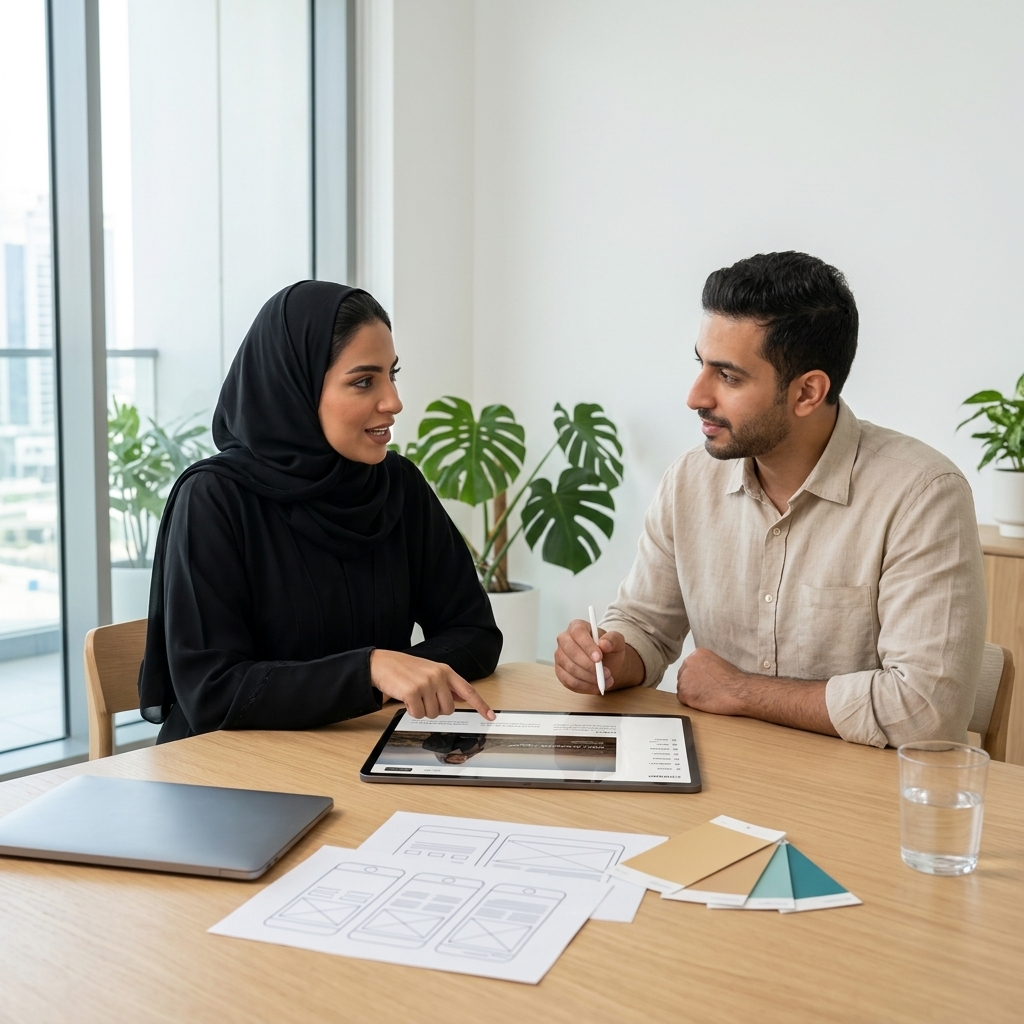
Expanding into a new market is about more than changing the language of your marketing. It means understanding how people interact with your brand.
Your website communicates something before a visitor reads a single paragraph: whether your business understands its audience. A thoughtfully designed Arabic website says, “We considered how you experience our brand.” A translated one says, “We translated our website for you.” For businesses building credibility across the Middle East, North Africa and wider Arabic-speaking markets, that difference matters.
From RTL layout precision and Arabic typography to bilingual content structures, responsive design and SEO-friendly architecture, KNOWN designs and develops premium Arabic and bilingual websites that bring together strategy, technology and cultural understanding.
Planning an Arabic or bilingual website for the UAE, Saudi Arabia or wider MENA region? Reserve your meeting with KNOWN and let’s build an experience that feels right in every language.